Studying the evolution of longevity-associated traits and the gene regulatory networks that govern them in extraordinarily long-lived mammals at all levels of life.
We’re recruiting undergrads, grad students, and postdocs interested in studying the evolution of aging using pangenomics, molecular and cellular biology, and functional evolutionary genomics.


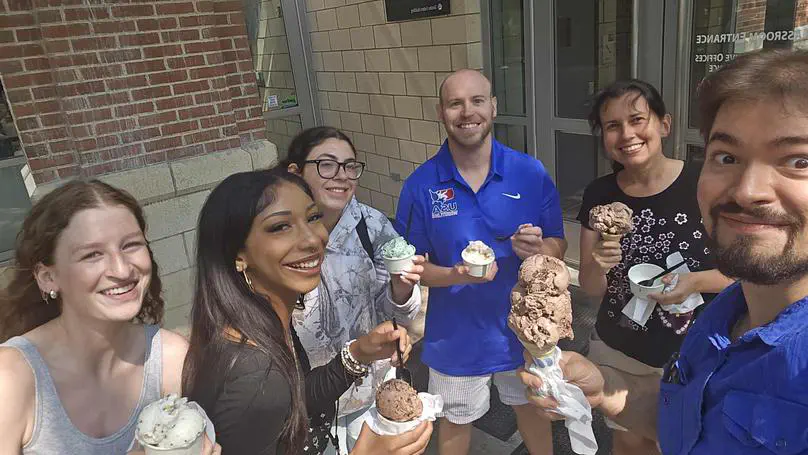
In a flash, Year 1 is done! Somehow, I was fortunate enough to land a solid team of people in a short amount of time: Jack, Shruti, and Quin were all in lab getting things up-and-running right as I started, then Kaitlyn, Marisa, & Veronica joined us soon after. We hit the ground running with ice cream (as one should), and then started a long few months of getting quotes, getting non-stop packages, and spending more time role-playing as engineers than working as biologists! We quickly got to work in the Spring as Emily joined the lab, and after a semester of actual work with recruitment, talks, troubleshooting, interviews, rotations… we welcomed Lavenda into the lab as the first PhD student!

The Vazquez Lab in now officially open at Penn State University! Now our work begins: studying the evolution of longevity-associated traits and the gene regulatory networks that govern them across extraordinarily long-lived mammals at all levels of life.

Our newest paper, featuring our work on understanding the evolution of longevity-associated traits and innate immunity in Myotis bats. The publication features our cell line resources and near-complete reference genomes for 9 species Myotis bats.

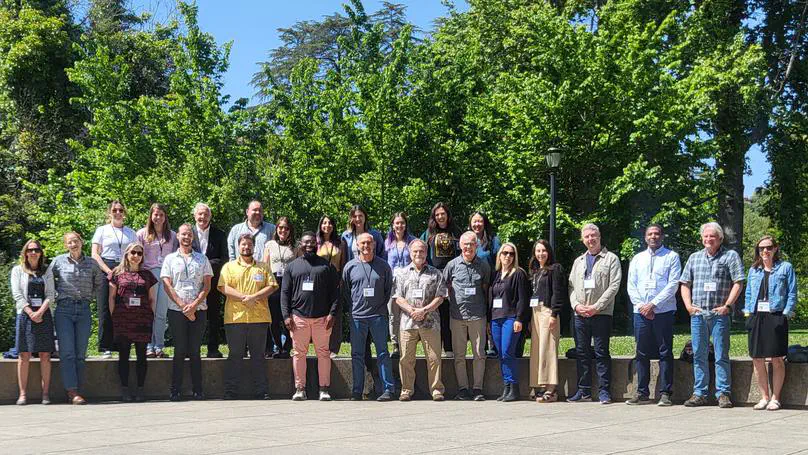
We had a great time meeting new and old friends and colleagues to discuss current work in physiology, toxicology, and cell biology on marine species! As a result of our discussions on the current challenges and opportunities in marine mammal research, we penned a position paper, which has since been published in Frontiers in Marine Science.